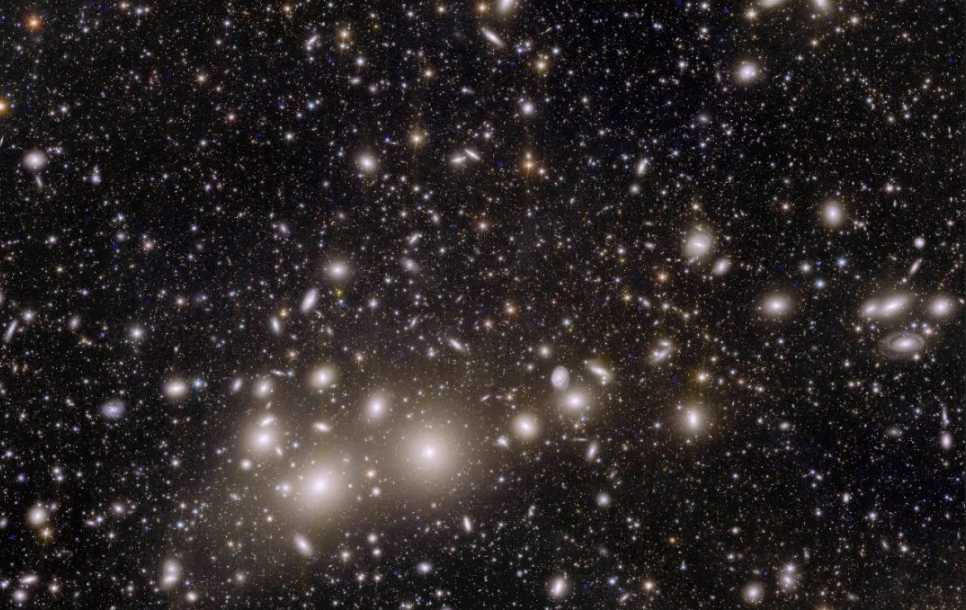
The Perseus Cluster (Abell 426): A Cosmic Lab for Dark Matter Studies 240 Million Light-Years AwayThe Perseus Cluster (Abell 426): A Cosmic Lab for Dark Matter Studies 240 Million Light-Years Away
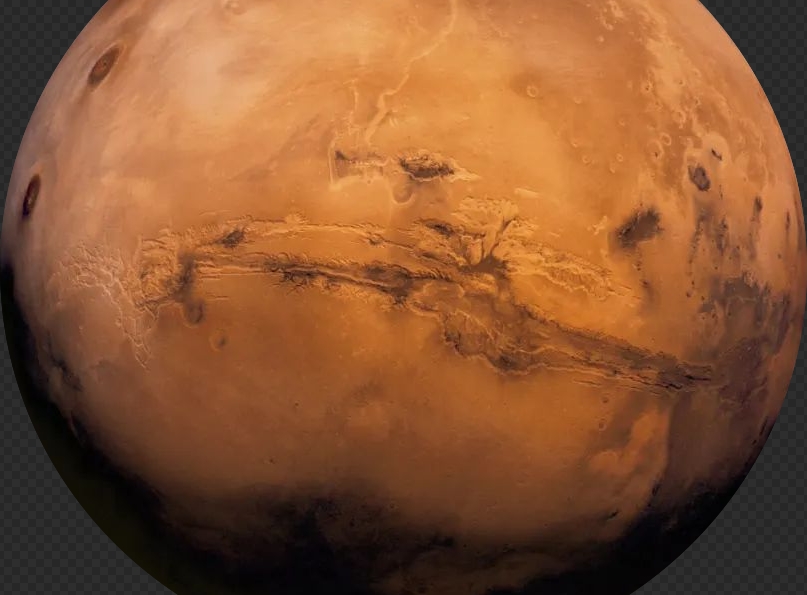
Mars' Magnetic Remnants: The Lost Shield and Its Cosmic ConsequencesMars' Magnetic Remnants: The Lost Shield and Its Cosmic Consequences
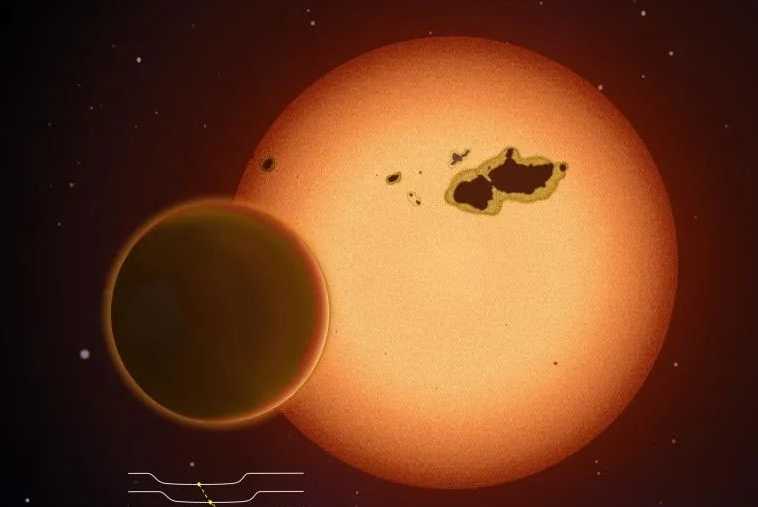
Chinese-led Team Uncovers 'Super-Earth' in Habitable Zone of Sun-like Star Using Novel TTV TechniqueChinese-led Team Uncovers 'Super-Earth' in Habitable Zone of Sun-like Star Using Novel TTV Technique
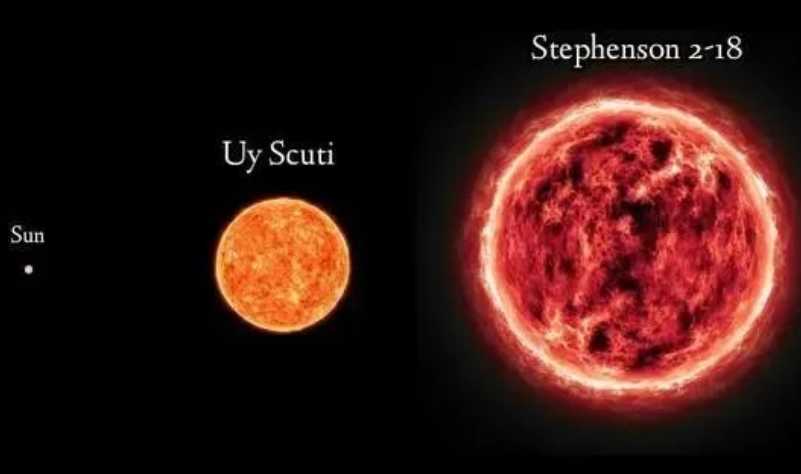
Stevenson 2-18: The Cosmic 'Puffball' Star That Could Swallow SaturnStevenson 2-18: The Cosmic 'Puffball' Star That Could Swallow Saturn
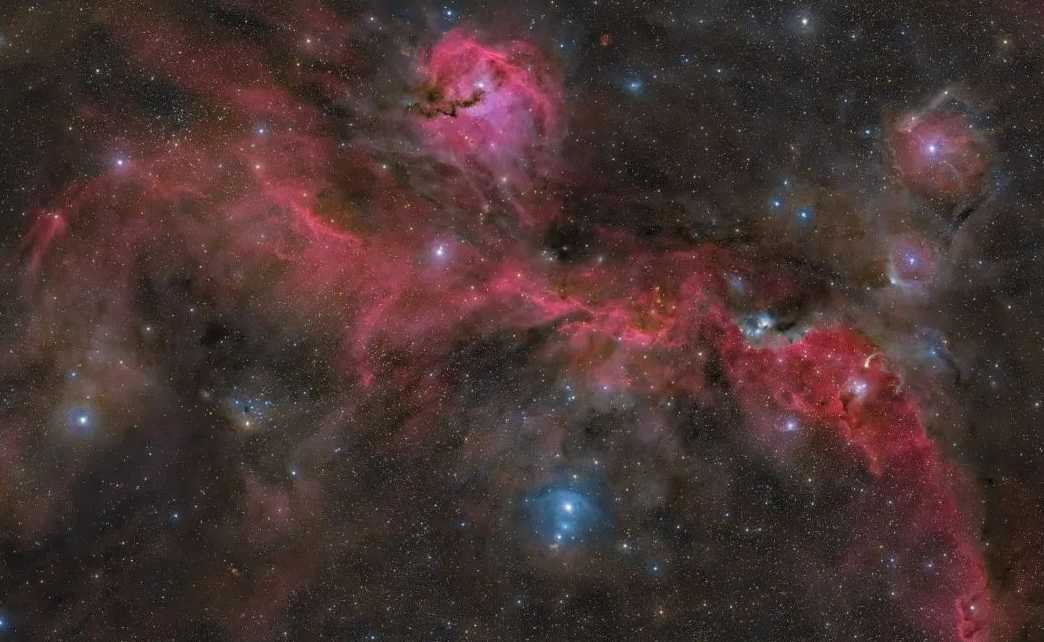
The Seagull Nebula: A Cosmic Avian Marvel in Canis MajorThe Seagull Nebula: A Cosmic Avian Marvel in Canis MajorShaped like a soaring bird from glowing gas and dark dust, the Seagull Nebula captivates stargazers with its celestial avian form. Spanning 3.5 degrees across the galactic plane in Canis Major, toward the star Sirius, this interstellar wonder combines emission nebulae, reflection nebulae, and dramatic shock structures—offering a window into violent stellar processes.
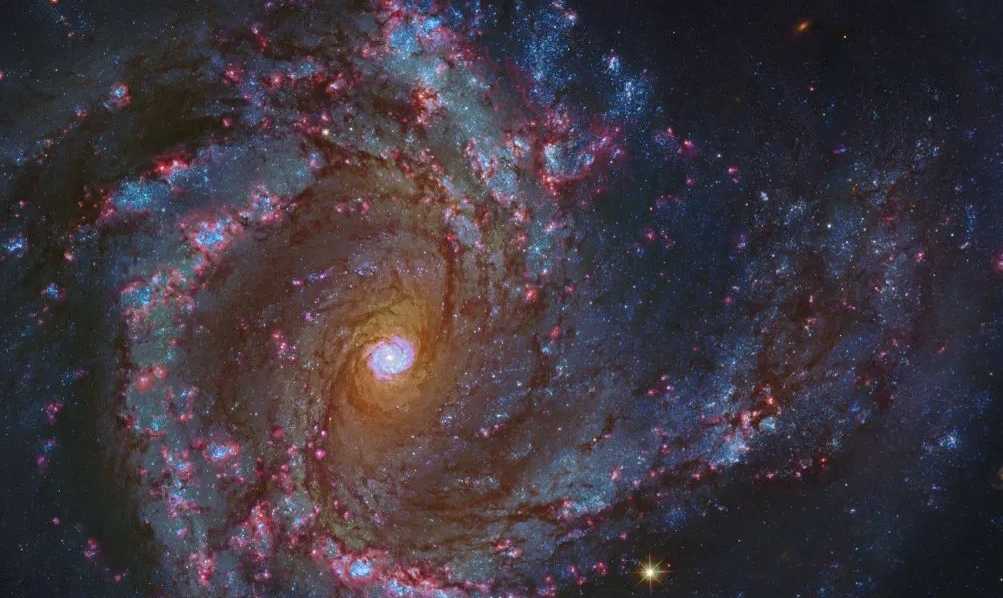
Does a Spiral Galaxy Hide a Mini-Spiral in Its Core? M61 Reveals Cosmic Nesting DollsDoes a Spiral Galaxy Hide a Mini-Spiral in Its Core? M61 Reveals Cosmic Nesting DollsThe spiral galaxy Messier 61 (M61) defies expectations with a surprising feature: a swirling "mini-spiral" structure at its core. This composite image—combining data from the Hubble Space Telescope, ESO’s Very Large Telescope, and ground-based observatories—shows M61’s grand spiral arms and a vibrant core that resembles a standalone spiral galaxy. Located 55 million light-years away in the Virgo Cluster, this barred spiral (NGC 4303) exemplifies how galactic cores can host intricate substructures mirroring their larger forms.
Mars' Mysterious 'Blueberries': How Did These Iron-Rich Spheres Form?Mars' Mysterious 'Blueberries': How Did These Iron-Rich Spheres Form?In 2004, NASA's Opportunity rover discovered thousands of gray, iron-rich spheres on Mars, nicknamed "blueberries." These 4-mm-wide balls littered rocks near the landing site, puzzling scientists until the rover found a depression—dubbed the "Berry Bowl"—packed with the spheres, captured on the 48th Martian day of the mission.
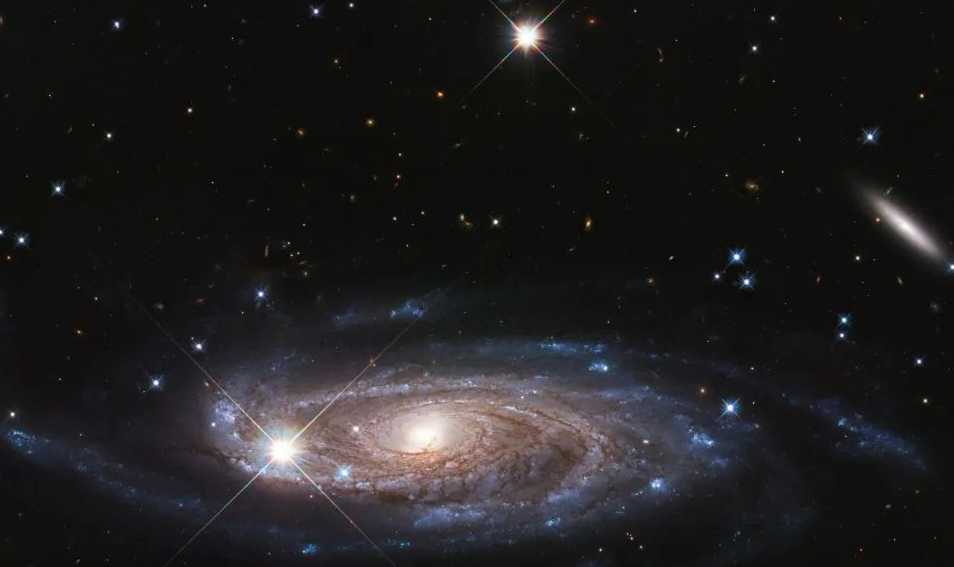
UGC 2885: The Colossal Galaxy 800,000 Light-Years AcrossUGC 2885: The Colossal Galaxy 800,000 Light-Years AcrossIn this Hubble Space Telescope image, foreground stars with bright stellar spikes in Perseus lie within the Milky Way, while the focus reveals UGC 2885—a giant spiral galaxy 232 million light-years from Earth. Stretching 800,000 light-years (eight times the Milky Way’s diameter), it hosts nearly 100 trillion stars—10 times our galaxy’s population—making it a pivotal case study for how galaxies achieve colossal sizes.
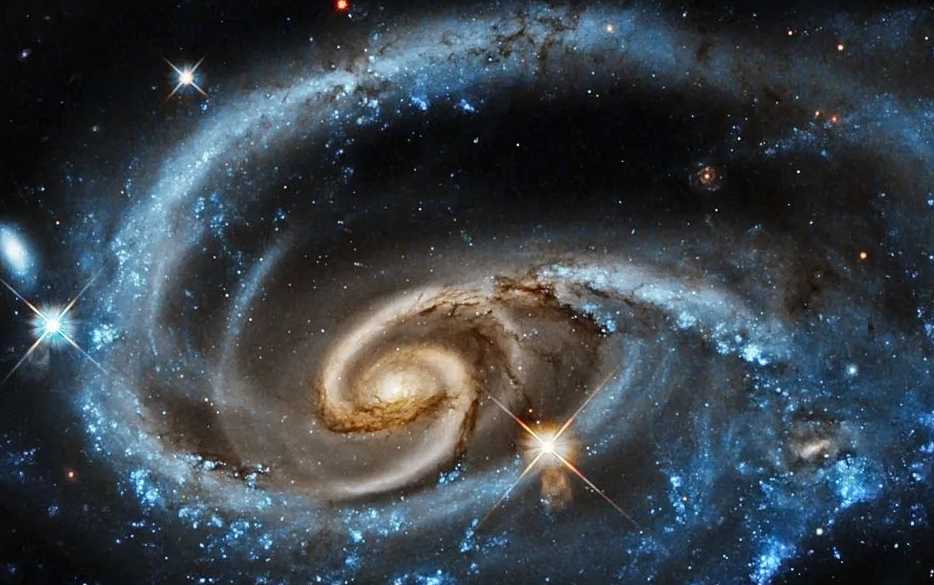
Arp 273: A Cosmic Love Story of Colliding Galaxies in AndromedaArp 273: A Cosmic Love Story of Colliding Galaxies in AndromedaWhat’s happening to this spiral galaxy? The answer lies in its violent tango with a neighboring dwarf galaxy. At the center of this image, UGC 1810 forms the Arp 273 galaxy pair with its collision partner, showcasing a cosmic drama where gravity reshapes stellar landscapes. The most striking feature—UGC 1810’s outer blue ring—betrays the chaos of their gravitational battle, while the smaller companion galaxy appears distorted in the embrace.
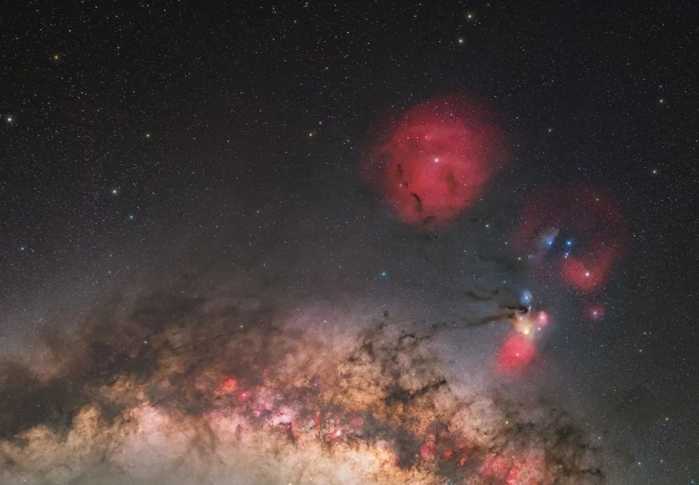
The Milky Way: A Celestial Canvas Over Mauna KeaThe Milky Way: A Celestial Canvas Over Mauna KeaOn a clear, moonless night, a faint band stretches across the sky, gradually resolving into a luminous ribbon as eyes adjust to the dark. This is no ordinary sight: it’s the Milky Way, a grand projection of our galaxy’s 千亿 stars. The galactic plane arcs elegantly across the frame, flanked by the colorful Rho Ophiuchi Nebula on the right and the red-ringed Zeta Ophiuchi Nebula at the top center. Taken in late February from Mauna Kea, Hawaii, the image features the University of Hawaii’s 2.2-meter telescope in the foreground—though you don’t need a volcanic summit to witness this cosmic wonder.
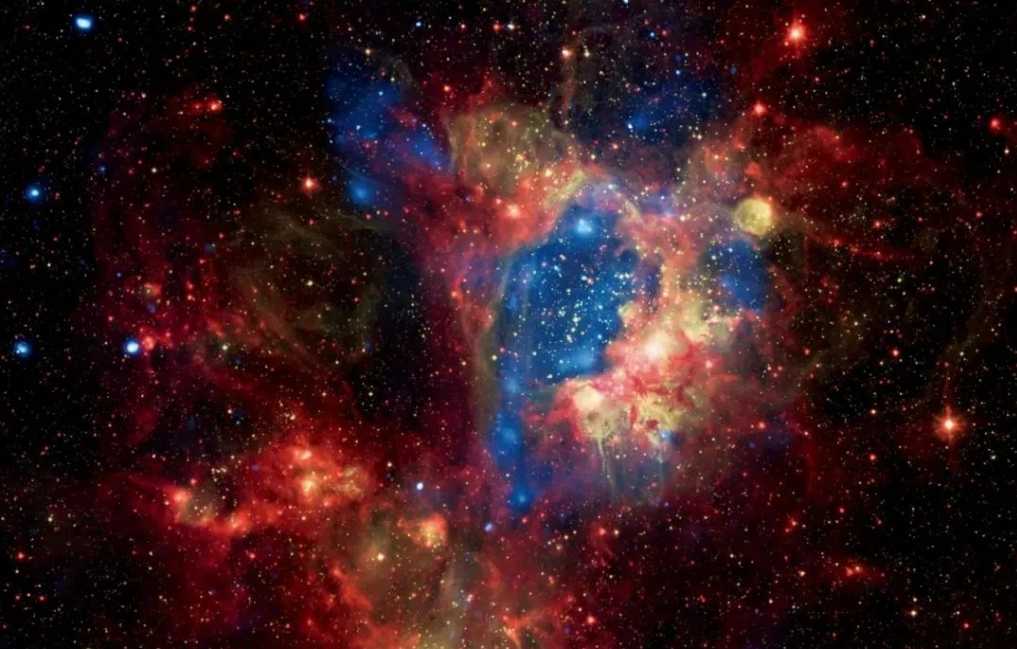
Nebulae: The Glowing Clouds of Star Formation and Stellar RemnantsNebulae: The Glowing Clouds of Star Formation and Stellar RemnantsThrough telescopes or astrophotography, celestial observers often encounter luminous, cloud-like structures known as nebulae. These cosmic formations, composed of gas and dust, have fascinated scientists for centuries. Initially classified into two broad categories—galactic nebulae (within the Milky Way) and extragalactic nebulae (beyond our galaxy)—they serve as crucial sites of stellar birth, evolution, and death.
Galaxies Near the Big Dipper: A Cosmic Showcase in Ursa MajorGalaxies Near the Big Dipper: A Cosmic Showcase in Ursa MajorThe region around the Big Dipper (Ursa Major) is a treasure trove of distant galaxies, offering astronomers and stargazers a glimpse into the diverse architecture of the universe. Among the most notable are M81 (Bode’s Galaxy), M82 (the Cigar Galaxy), M51 (the Whirlpool Galaxy), and M101 (the Pinwheel Galaxy), each distinct in shape, size, and cosmic story.
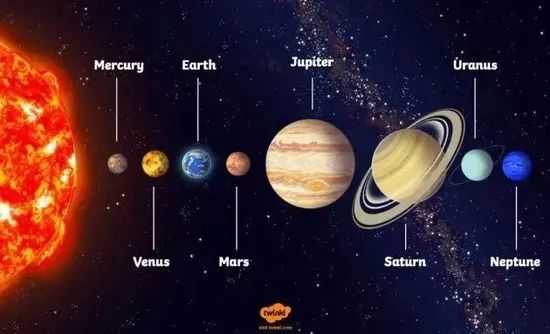
The Solar System's Planetary Trio: Terrestrial, Gas, and Ice GiantsThe Solar System's Planetary Trio: Terrestrial, Gas, and Ice GiantsWhile the solar system is home to just eight planets, they are remarkably diverse, categorized into three distinct groups based on composition and structure. This classification—terrestrial planets, gas giants, and ice giants—reveals the dynamic processes that shaped their formation and highlights the vast range of environments within our cosmic neighborhood.
The Carina Nebula: A Cosmic Cradle Hidden in the Southern SkiesThe Carina Nebula: A Cosmic Cradle Hidden in the Southern SkiesThe Carina Nebula, a celestial marvel nestled between 6,500 and 10,000 light - years from our Solar System, remains a sight exclusive to the Southern Hemisphere. This vast region, a hotbed of cosmic activity, has been pivotal in birthing some of the Milky Way's most massive stars, providing astronomers with a front - row seat to the dramatic processes of stellar formation.
The Cosmic Snow Angel: Hubble Captures S106 IR's Star - Forming RegionThe Cosmic Snow Angel: Hubble Captures S106 IR's Star - Forming RegionIn the vast expanse of the constellation Cygnus, about 2000 light - years from Earth, lies a remarkable star - forming region centered around the young star S106 IR. The powerful radiation emitted by this star has enabled the Hubble Space Telescope to capture an image of the surrounding gas and dust, which strikingly resembles a celestial snow angel, a sight that has captivated astronomers and space enthusiasts alike.
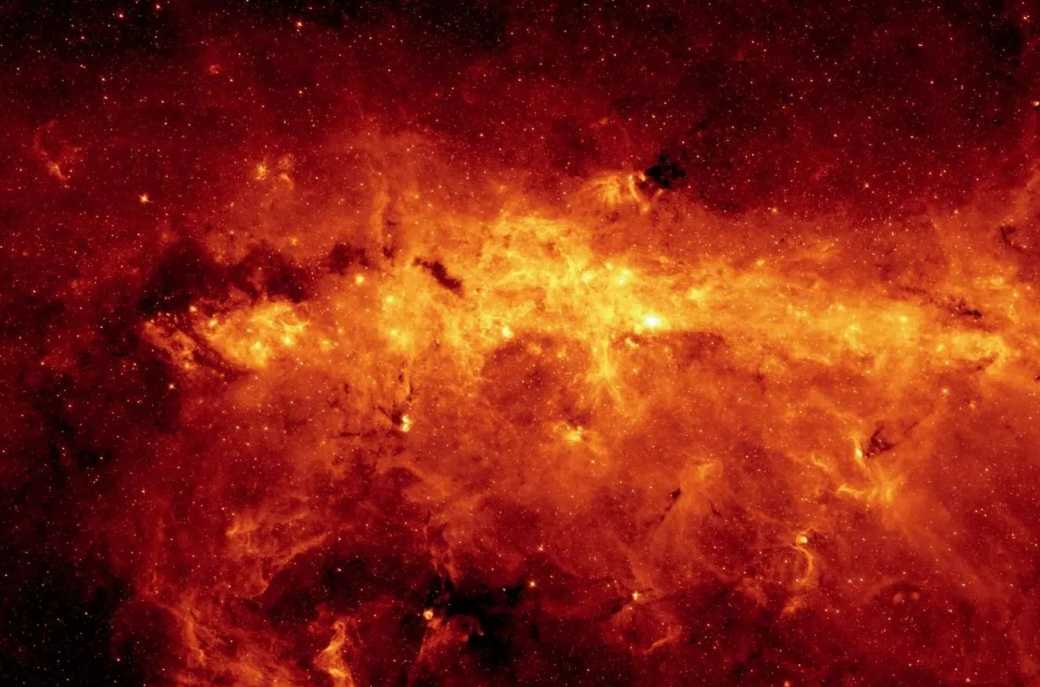
Spitzer's Infrared Glimpse into the Heart of the Milky WaySpitzer's Infrared Glimpse into the Heart of the Milky WayA remarkable image captured by NASA's Spitzer Space Telescope has unveiled the hidden splendor of the Milky Way's central region. In visible light, this area is veiled by thick clouds of obscuring dust and gas. However, Spitzer's infrared cameras have pierced through these obstructions, presenting a breathtaking view of the crowded galactic core.
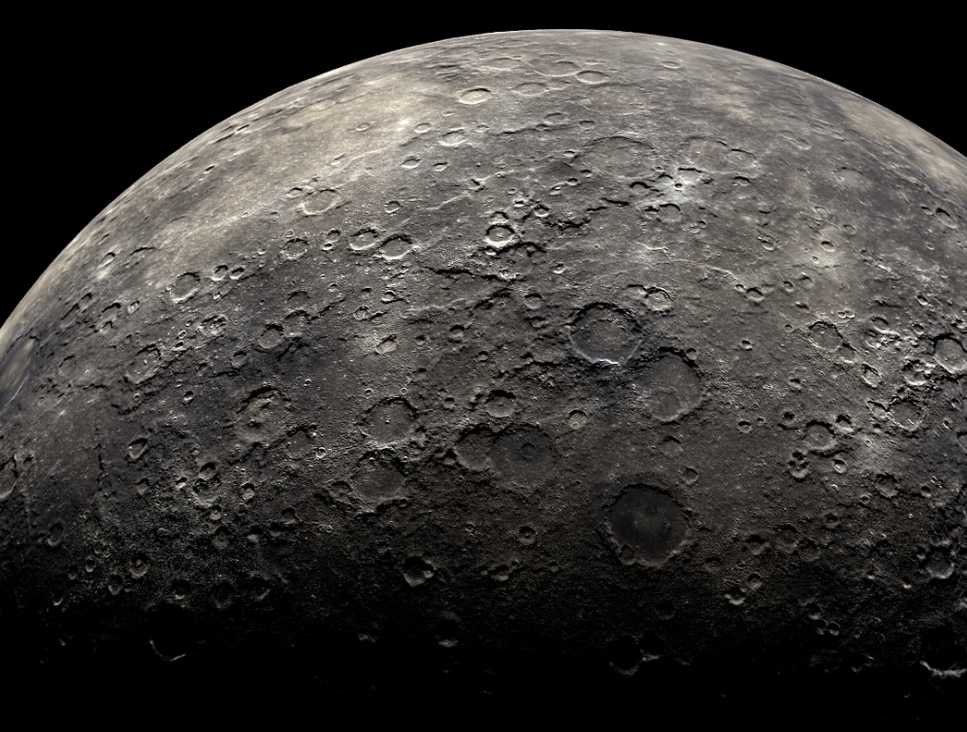
Mercury: The Solar System’s Closest and Most Enigmatic WorldMercury: The Solar System’s Closest and Most Enigmatic WorldMercury, the innermost planet of our solar system, orbits perilously close to the Sun, facing extreme temperatures and cosmic challenges. As the smallest of the eight planets, it stands out for its unique geological features and intriguing history, captivating astronomers with its secrets hidden beneath a heavily cratered surface.
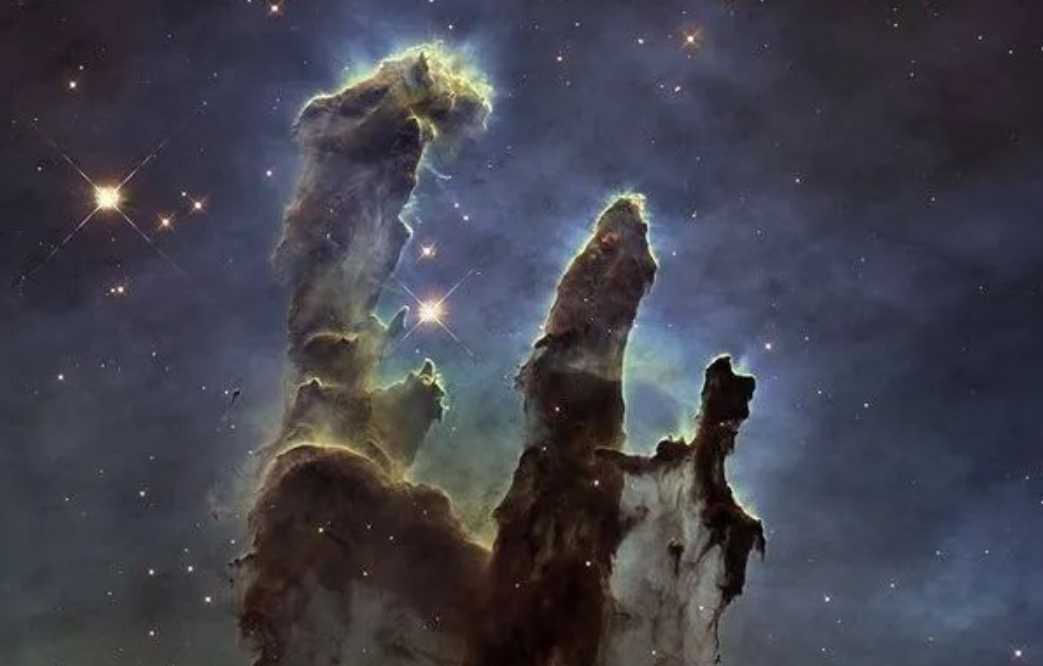
Hubble's Iconic 'Pillars of Creation'Hubble's Iconic 'Pillars of Creation'The "Pillars of Creation," an iconic image captured by the Hubble Space Telescope in 1995, is one of its masterpieces. This photograph, taken in the Eagle Nebula (M16), showcases three massive gas pillars that reach up to 4 - 5 light - years in height, serving as a cradle for star birth.
The Sombrero Galaxy (M104): A Cosmic Hat of Stellar WondersThe Sombrero Galaxy (M104): A Cosmic Hat of Stellar WondersNamed for its striking resemblance to a Mexican sombrero, the Sombrero Galaxy (M104) is an iconic spiral galaxy that captivates astronomers and stargazers alike. Spanning approximately 50,000 light-years in diameter and located about 30 million light-years from Earth, this celestial object stands out for its unique structure and immense scale.
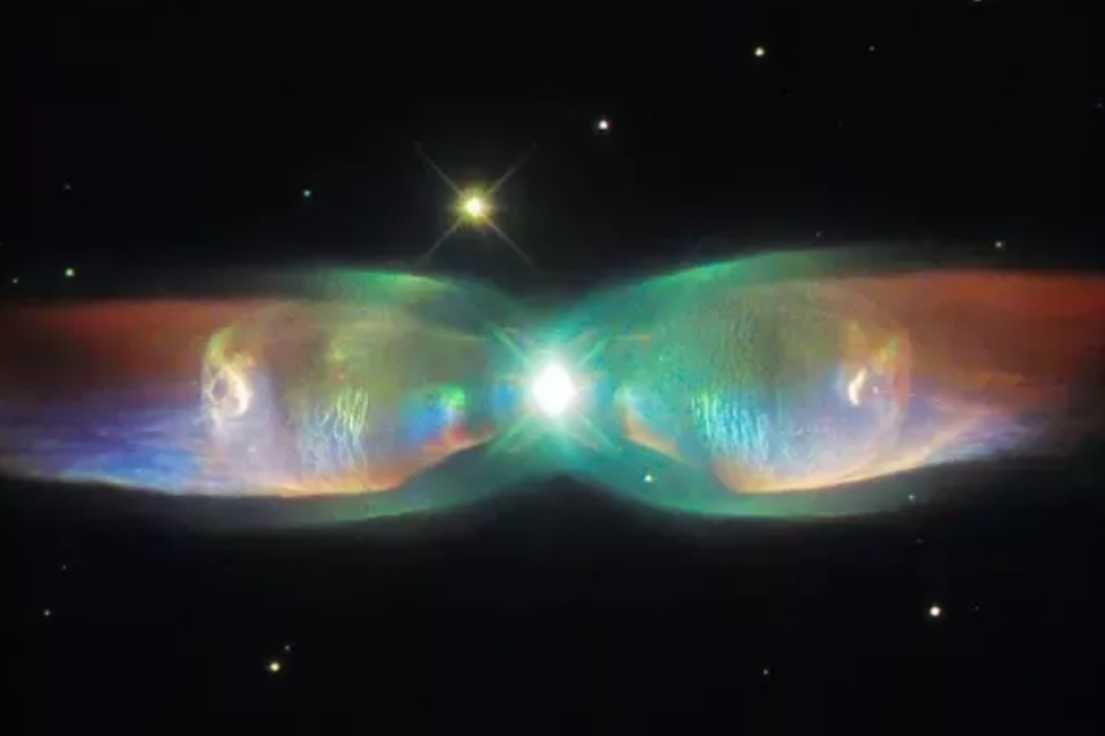
The Enigmatic Bipolar Jets of Planetary NebulaeThe Enigmatic Bipolar Jets of Planetary NebulaeThe bipolar nebula, a rare and fascinating cosmic spectacle, stands as a testament to the dramatic final stages of stellar evolution. Often triggered by the death of a star, these nebulae are defined by their most striking feature: two symmetrical jets of gas and dust ejected in opposite directions, giving them their distinctive name and appearance.